


MoreAdaptBSB Meeting Highlights Regional Cooperation for a Greener Black Sea
Ovidius University of Constanța successfully hosted the 2nd Knowledge Exchange Group Meeting in Constanța, Romania on 21–23 October 2025.
of the “MoreAdaptBSB – Less vulnerability, more adaptability” (BSB00479) project, bringing together project partners, policymakers, scientists, and regional stakeholders fаrom Greece, Bulgaria, Romania, Ukraine, and Moldova. The meeting was held under the framework of the Interreg VI-B NEXT Black Sea Basin Programme, focusing on strengthening cross-border cooperation for ecosystem restoration and climate resilience in coastal and urban environments.
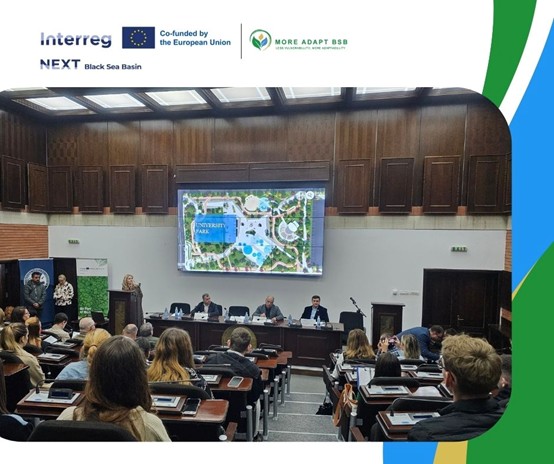
Opening Session: Regional Collaboration for a Resilient Future
The meeting opened with a warm welcome and an overview of the project’s goals and upcoming activities, delivered by representatives of Ovidius University of Constanța, notably Prof. Raluca Trandafir, Vice Rector for Structural Funds and Project Manager of MoreAdaptBSB.
In his address, Mr. Răzvan Filipescu, Vice President of the Constanța County Council, emphasized the regional importance of the project, underlining its contribution to both the university and the city’s long-term sustainable development. A representative of the Mayor of Primorsko (Bulgaria) extended greetings and support from the Bulgarian side, while Prof. Mykhailo Broshkov, Rector of Odesa State Agrarian University (Ukraine), highlighted the value of regional collaboration in tackling shared environmental challenges across the Black Sea region.
“Through this initiative, we are not just sharing knowledge; we are building a strong regional network capable of addressing the pressing challenges of climate change,” said Prof. Raluca Trandafir.
Panel Discussions: Science, Policy, and Local Action
The technical sessions featured two high-level panels, gathering experts from environmental authorities, academia, and regional organizations to discuss ecosystem restoration, coastal resilience, and governance frameworks for adaptation.
Panel I – Environmental Data, Research, and Cooperation
Moderated by Ovidius University, the first panel included:
- Stelică Hagi, General Manager, Dobrogea-Litoral Water Basin Administration
- Florin Timofte, PhD, General Manager, National Institute for Marine Research and Development “Grigore Antipa” (INCDM)
- Dan Vasiliu, PhD, Deputy Manager, GEOECOMAR Constanța
- Artur Nebunu, Administrator, Ecological Counseling Center, Cahul, Republic of Moldova
Discussions explored the environmental pressures facing the Black Sea coastal ecosystems and presented innovative scientific methods for monitoring and restoration. The participants emphasized the crucial role of marine research, data sharing, and enforcement of environmental regulations in ensuring long-term ecological balance.
Panel II – Governance, Innovation, and Regional Cooperation
The second panel brought together academic and private-sector voices, including:
- Diane Paula Corina Vancea, PhD, President of the Senate, Ovidius University of Constanța and Project Coordinator of MoreAdaptBSB
- Adrian Bîlbă, PhD, Manager, SC UNIVET Company SRL
- Costel Stanca, PhD, ATLAS Research Constanța
- Nebi Kehaya, FLAG Burgas–Kameno, Bulgaria
- Rumen Kostadinov, Tonus Group LTD, Bulgaria
- Flori Brașoveanu, PhD, Faculty of Law and Administrative Sciences, Ovidius University
- Prof. Natașa Maria Tătui Văidianu, PhD, Faculty of Natural Sciences, Ovidius University
- Prof. Cristi Iftene, PhD, Head of the Department of Administrative Sciences, Ovidius University
This session focused on aligning regional policy frameworks with the EU’s climate and biodiversity targets, strengthening local governance, and encouraging multi-level collaboration for sustainable land and coastal management. The speakers agreed that combining scientific evidence, legal instruments, and community engagement is key to building resilient coastal cities.
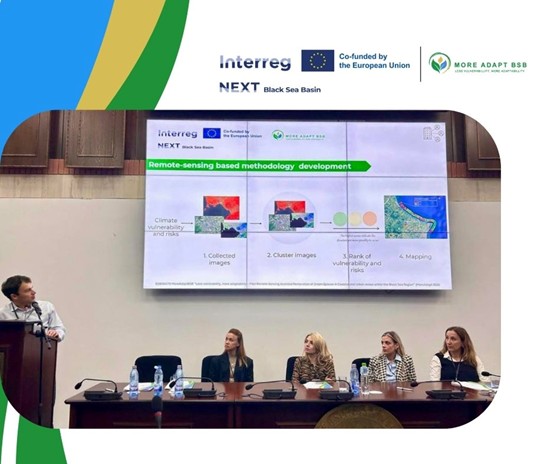
In the afternoon, partners reviewed the remote-sensing methodology for assessing green space restoration, presented by the Via Pontica Foundation, which leads the development of the monitoring framework. The session showcased preliminary findings from the pilot sites. In this vein, EPICHAL representatives presented the dissemination results for the first half of the project and the upcoming activities to externalize project actions.
Study Visit: Science, Nature, and Culture in Constanța
On the second day, participants joined a study visit to the urban pilot area, followed by an excursion to the National Institute for Marine Research and Development “Grigore Antipa”, where they explored Romania’s marine biodiversity research initiatives and discussed potential collaborations.
The day concluded with a cultural tour along the Constanța coastline, highlighting the city’s unique blend of natural heritage and cultural identity, reinforcing the project’s message that environmental resilience is deeply connected with local communities and culture.
Looking Ahead
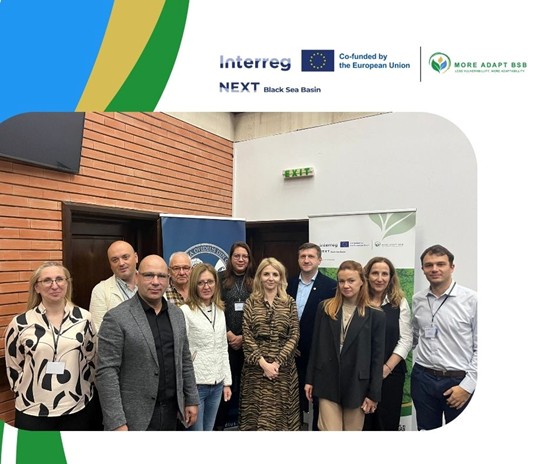
The Constanța meeting marked a significant milestone for the MoreAdaptBSB consortium. Participants expressed strong appreciation for the host’s organization and reaffirmed their commitment to advancing ecosystem restoration and climate resilience throughout the Black Sea Basin.
The next Knowledge Exchange Group meetings are scheduled to take place in Burgas, Bulgaria, continuing the project’s efforts to co-create sustainable, nature-based approaches that strengthen cooperation among partner countries.
About the Project
The project “Less vulnerability, more adaptability – pilot remote sensing assisted restoration of green spaces in coastal and urban areas within the Black Sea region” (MoreAdaptBSB – BSB00479) is co-funded by the Interreg VI-B NEXT Black Sea Basin Programme.
It promotes nature-based solutions, remote sensing tools, and knowledge exchange for environmental restoration in the Black Sea Basin, with pilot activities in Romania, Bulgaria, Greece, Ukraine, and Moldova.
“The project is being implemented between July 26, 2024, and January 25, 2027, and has a total value of €1,594,728, of which €1,435,255.20 is funding provided by the European Union through the Interreg NEXT Black Sea Basin Program. As a partner, Primorsko Municipality receives contracted funding of 250 765.20 euros.”
Follow the project’s journey:
- 🌿Facebook: MoreAdapt BSB Project
- 🌍LinkedIn: MoreAdapt BSB Project
- 🎥YouTube: MoreAdapt BSB Project
 0
 0

 0